 |
Stick it deeper.
 Standard needles aren't long enough to break through our fat asses to the muscle. Reminds me of the story I saw about people needing bigger toilets. (NB: do not try to search for that article with the terms big fat toilet. Yuck.)
Phone cheat sheet.
 Just what everyone needs: a cheat sheet for dealing with automated phone systems. From now on, whenever you get an automated system, take notes and write this guy!
Popcasts: Podcast aggregator.
Popcasts: Popcasts is an aggregator of the most popular podcasts from many different directories and ranking sites, all on one page.
For those of you who are in to that kind of thing. Filter filter filter.
Perhaps Arthur lost himself and had to flee...
 Rimbaud's inspirational methods Rimbaud's inspirational methods I say you have to be a visionary, make yourself a visionary.
A Poet makes himself a visionary through a long, boundless, and systematized disorganization of all the senses. All forms of love, of suffering, of madness; he searches himself, he exhausts within himself all poisons and preserves their quintessence's. Unspeakable torment, where he will need the greatest faith, a superhuman strength, where he becomes among all men the great invalid, the great criminal, the great accursed--and the Supreme Scientist! 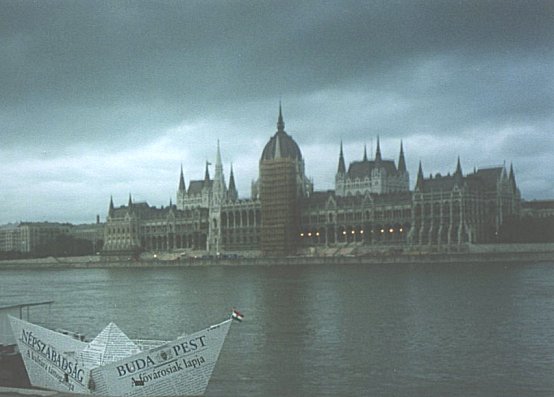 If I still long for Europe's waters, it's only for
One cold black puddle where a child crouches
Sadly at its brink and releases a boat,
Fragile as a May butterfly, into the fragrant dusk.
Bathed in your weary waves, I can no longer ride
In the wake of cargo ships of cotton,
Nor cross the pride of flags and flames,
Nor swim beneath the killing stare of prison ships. From Wyatt Mason's translation of La Bateau Ivre; The Drunken Boat
Attn. Windows Users: Password Safe
 Passwordsafe Passwordsafe is a utility originally developed by Bruce Schneier to address the problem that many of us have: How to keep track of all our login information while maintaining personal security. I find that many people have said jokingly that they have one "low-security" password that they use for many sites. What I wonder is: why? Why compromise your personal information when there are many tools out there to help you manage your logins in a safe, secure (encrypted), and most importantly, EASY TO USE fashion. I recommend this utility. I've never had such an easy time managing my bank accounts, my identification information (passport numbers, SSN, drivers license, my Australian visa info and Australian TFN, these things add up and it is often in dealing with my visa and such online that the information is required and password safe allows me to have it at my fingertips in an easy to copy and paste format.) I've just counted how many entries I have in passwordsafe and decided to stop at a hundred, as I feel that is a significant enough magnitude to make my point. Best of all, it allows me to organize my information. For example, when managing my domains I have FTP info, SSH info, etc. I can keep not only the password safe, but I organize my information into easily manageable and unforgettable structures. Okay, I'm done selling you this. Peace. ( NB: This is NOT the passwordsafe that I speak of: passwordsafe.com )
The Wonderous and Magnificent Beauty of Chaos, Expressed Through the Medium of Population Excess

The subway doors open. A hobo enters, holding a bottle of windex in one hand and a tube of toothpaste in the other. He says: Which is the better time to read Dostyevsky? Winter? He sprays the windex. Hobo: Or Spring? He squeezes toothpaste out of the tube. Japanese girl: Spring!
Hobo: You are correct. --F train
Overheard in New York
Microcosmos
 "I sleep beside a massy tower of my shit," he thought as he turned to unbind it; to organize within discrete bounds or build through the roof the remnants.
Google Print: A web full of questions.
 - What does Google Print do?
According to Google: Google Print aims to make offline information searchable through Google's search engines. When a user enters a query, Google returns results from books that match it. If the book is not copyright protected, Google print will allow the viewer to access the entire work; if the book is copyright protected, just a brief snippet will be provided. Other features accompanying the service are further searches revealing web-results related to the book, links to online booksellers or nearby libraries that have the book. How did Google get the text? Either through the publisher program or a library project.
- Why are people excited? Upset?
Information available on the Internet has long been chided by many for having all too compressed information, fluff without review, and generally less value than traditional forms of publication like journals and books. If Google brings printed material to the fingertips of searchers anywhere, the Internet stands to gain a lot of value.
It is not entirely new. Amazon.com has had a search inside this book feature since October, 2003.
However, not all of the books that Google aims to index are necessarily free for the taking. Many of the books scanned in Google Print's Library Project are still under copyright, and some are being commercially exploited. Those that are under copyright protection by law, but which are not actively being commercialized, or those that are orphaned by their authors make up the majority of the works to be scanned in the Library Project. This poses a problem for Google if lawsuits (see below) threaten to limit the library project to works that are completely out of copyright.
On Sept 20, 2005, the Authors Guild filed a class-action copyright infringement suit against Google over its Google Print library project. The Electronic Frontier Foundation (EFF) feels that Google has a strong case, calling the service "the digital equivalent of a library card catalog." The EFF believes that Google Print is transformative in its use of copyright protected material, a key defense to infringement on the grounds of fair use. On October 19th, the Association of American Publishers filed a complaint in a U.S. District Court in New York, alleging that Google's copying of copyright protected books is infringing.
- Is it Google's place to provide this service?
That is a question left to the political alignment of the reader ;-)
But seriously, if it were a library that introduced the indexing system, the viewpoints would be different. What makes people feel a little funny about the whole deal is that Google is not paying for the books, yet they will likely make a lot of money off of ads placed next to searches, let alone whatever else they can think of to do with the vast array of knowledge gained by having indexed so many of the world's published works.
- If Google stands to make a lot of money, should they share?
Legally? Politically? Strategically? What if Google were a nonprofit or government agency? How could Google compensate the authors whether or not they _should_? Yes, there are many questions that are on the minds of people in the creative industries, as well as Internet visionaries. It seems so grand to imagine the world's works at your fingertips, but yet this vision takes a lot of (opposing) interests in granted alignment (this is not realistic).
Google didn't pay for the books that were scanned by the libraries, but someone did. Should this matter? Google Print may increase demand for copyright protected books if it improves the potential reader's ability to find what they are looking for and acquire it by purchasing it online. Is it authors who are getting hurt or is it the publishers? Google and Amazon just may be building an online publishing alternative. This would allow authors greater access to their readership without the need for traditional publishing agents.
In response to the uproar by publishers, Tim O'Reilly (himself a publisher) writes:
Along comes a player who says "I have a way to promote those books that the publishers have thrown away, creating an opportunity for them to find readers, and eventually, sales." The publishers complain, because they are worried that someone else is going to make money from their slag heap, or more likely, because they are worried that there's some downside risk to their top sellers, even if there's a lot of benefit to the bottom and mid-list books.
It is interesting and left to be determined whether Google Print would significantly stimulate demand for books that would otherwise go unnoticed. If so, would this subtract from the demand of best-sellers, and if so, would the net effect be to increase or decrease total demand for published material?
- Fair use: Is it?
The purpose of copyright law is to disseminate information, isn't this what Google is assisting? Are the publishers greedy? Google made copies for their own purposes and can use these copies for research and development of their search algorithms. Does this fall within the scope of fair use? At issue in the lawsuit is whether Google allowing authors to opt out is sufficient, I wonder if it is necessary at all. The real issue, I think, is on which of two perspectives to hinge the intent of copyright law. Google is making entire copies of copyright protected material; even if they only let their searchers access snippets (easily covered by fair use), is the fact that they made the copy in the first place enough to warrant a claim of infringement and subsequent remedy or injunction? Not necessarily, the amount of copying is only one of the elements considered in determining Fair Use.
- Conclusion:
Google is on a roll with this one. If they prevail in the lawsuit, they will earn their high share price and make us all turn a brighter shade of green. If they lose, it will be interesting to see how they lose and what this means for the next-gen Internet. This is certainly a precedent-setter, indeed. The ethics of the situation are left to the reader to work out. I think that as long as they preserve copyright protected works from being copied in full, limiting copies to snippets only (as they have stated that they intend to do), that they are not infringing on the rights of the owners by putting the material available on the web. I am not sure how I feel about Google copying the texts in full and keeping them in house as a business resource, but I lean toward thinking it foul-play. In this regard, with the knowledge I have, I would award copyright holders damages from Google's infringement.
Whitman waxes and wanes and waxes away
 OUT of the cradle endlessly rocking, OUT of the cradle endlessly rocking,
Out of the mocking-bird's throat, the musical shuttle,
Out of the Ninth-month midnight,
Over the sterile sands and the fields beyond, where the child leaving his bed wander'd alone, bareheaded, barefoot,
Down from the shower'd halo,
Up from the mystic play of shadows twining and twisting as if they were alive,
Out from the patches of briers and blackberries,
From the memories of the bird that chanted to me,
From your memories sad brother, from the fitful risings and fallings I heard,
From under that yellow half-moon late-risen and swollen as if with tears,
From those beginning notes of yearning and love there in the mist,
From the thousand responses of my heart never to cease,
From the myriad thence-arous'd words,
From the word stronger and more delicious than any,
From such as now they start the scene revisiting,
As a flock, twittering, rising, or overhead passing,
Borne hither, ere all eludes me, hurriedly,
A man, yet by these tears a little boy again,
Throwing myself on the sand, confronting the waves,
I, chanter of pains and joys, uniter of here and hereafter,
Taking all hints to use them, but swiftly leaping beyond them,
A reminiscence sing.-----------  Walt Whitman, a kosmos, of Manhattan the son, Walt Whitman, a kosmos, of Manhattan the son,
Turbulent, fleshy, sensual, eating, drinking and breeding,
No sentimentalist, no stander above men and women or apart from
them,
No more modest than immodest.
Unscrew the locks from the doors!
Unscrew the doors themselves from their jambs!
Whoever degrades another degrades me,
And whatever is done or said returns at last to me.----------- It avails not, time nor place - distance avails not,
I am with you, you men and women of a generation, or ever so many generations hence,
Just as you feel when you look on the river and sky, so I felt,
Just as any of you is one of a living crowd, I was one of a crowd, Just as you are refresh'd by the gladness of the river and the bright flow, I was refresh'd, Just as you are refresh'd by the gladness of the river and the bright flow, I was refresh'd,
Just as you stand and lean on the rail, yet hurry with the swift current, I stood yet was hurried,
Just as you look on the numberless masts of ships and the thick-stemm'd pipes of steamboats, I look'd.----------- O baffled, balk'd, bent to the very earth,
Oppress'd with myself that I have dared to open my mouth,
Aware now that amid all that blab whose echoes recoil upon me I have
not once had the least idea who or what I am,
But that before all my arrogant poems the real Me stands yet
untouch'd, untold, altogether unreach'd,
Withdrawn far, mocking me with mock-congratulatory signs and bows,
With peals of distant ironical laughter at every word I have written,
Pointing in silence to these songs, and then to the sand beneath. I perceive I have not really understood any thing, not a single I perceive I have not really understood any thing, not a single
object, and that no man ever can,
Nature here in sight of the sea taking advantage of me to dart upon
me and sting me,
Because I have dared to open my mouth to sing at all.----------- AFTER a long, long course, hundreds of years, denials,
Accumulations, rous'd love and joy and thought,
Hopes, wishes, aspirations, ponderings, victories, myriads of
readers,
Coating, compassing, covering - after ages' and ages' encrus-
tations,
Then only may these songs reach fruition. ----------- The Whitman Archive, source of the photos and offering most editions of Whitman's opus onlineRevising Himself: Whitman and Leaves of Grass[an LoC production] [ compositional co-credit due to the braineel]
CC in a nutshell
 Ok. So, the Creative Commons currently has a newsletter that explains their history and purpose. If you are very interested in the history and philosophy of CC, go read the archives and/or sign up for yourself. If you are just interested in the bare-bones practical aspects of the licenses, this post is for you. In the spirit of CC, I attribute and reformat to make it easier for the casual browser and average writer/composer/producer to digest. Stay tuned for the last of my comments on the creative commons and you.
- The Creative Commons (CC) is a response to the difficulty of utilizing copyright law effectively given the Internet; the inability of the traditional framework to cope well with the tremendous changes that the Internet and related technologies present to the economy.
- The basic idea of the CC is taken from the Free Software Foundation: Give copyright licenses away for free.
- Traditional copyright leaves too many potential uses of a work unregulated: the act of reading a book is not covered by copyright because no copy of the work has been made.
- In cyberspace, there is no way to read a book without making a copy.
- In principle, any use of a work in cyberspace would require permission from the copyright owner.
- CC does not seek to eliminate proprietary culture, it seeks to build a buttress of freely available culture.
- CC was created as a way to allow authors to announce to the world the freedoms that they wish their work to carry.
- Copyright: All rights reserved.
- CC: Some rights reserved.
- There are Four Basic Components to the CC license scheme:
- Attribution
- Non-Commercial
- No Derivatives
- Share Alike (any derivative made using the licensed work must also be released under a Share Alike license)
- 98% of original adopters chose the Attribution option, so the core licenses have dropped Attribution as an option (it is now automatically included), the six resultant core licenses of the CC are as follow:
- Attribution (use the work however you like, but give me attribution)
- Attribution-ShareAlike (use the work however you like, but give me attribution, and license any derivative under a Share Alike license)
- Attribution-NoDerivatives (use the work as is, and give me attribution)
- Attribution-NonCommercial (use the work for noncommercial purposes, and give me attribution)
- Attribution-NonCommercial-NoDerivatives (use the work for noncommercial purposes, as is, and with attribution)
- Attribution-NonCommercial-ShareAlike (use the work for noncommercial purposes, give me attribution, and license any derivative under a ShareAlike license)
- Creative commons licenses are default.
A 'Noncommercial' license does not mean the creator would never take money for his or her creativity. It means simply, 'Ask if you want to make a commercial use. No need to ask if you want to make just a noncommercial use.'
___
 _____ concept braineel design kerinth
I'll Take a Second Coming With a Twist of Lime
 In this hurly-burly, work-a-day world of ours, what with the internet, carbon dating and all those damnable rockets to the moon, its even easier than ever before to toddle out from under the skirt of organized religion and find oneself stuck in a the harsh and frightening world without a god. But don't worry, for all those people who'd prefer to scamper for cover, there's a new skirt in town, or in this case toga. Here is a Modern Drunkard Magazine article regarding the slowly growing popularity of the Revived Order of Dionysus. For those of you not familiar with the Greek Pantheon, Dionysus is commonly remembered as the patron god of wine, women and song, to give you the Cliff's Notes version.
So, You Want to Worship Dionysus? Much like all those who engage rather excessively in drink, Dionysus was a god of many facets, some having only tenuous relation to the others. He was a patron of wine, agriculture, fertility, nature, the Greek stage, civilization, death, rebirth, lawfulness, ecstatic fervor and passion, and bestial destruction. Anyone who has had decent experience with the many and varied effects of alcohol should be able to completely understand how a god of wine could come to have his hand in so many cookie jars. Agriculture was his main job, make sure those grapes come in nice and healthy and the wine is robust with a fruity bouquet. From there, it is easy to see where the association with nature, fertility, death and rebirth come in. Much like the crop he protected Dionysus would catch a long nap through winter and wake up just in time to start planting. Next we have one of my favorite side effects of spirituous beverages, socializing. Once the grapes have been harvested and turned to wine, it is time to sit back and enjoy the "fruits of your labors". With the imbibing of wine comes a natural desire to commune with your fellow human beings, in a variety of ways. Sometimes you want to enjoy the company of others in a relaxed, entertaining setting, hence the theater. What is a better way to spend an evening than with a few good friends, a large bowl of wine and a good poet telling stories? Or perhaps you'd rather commune more intimately with a specific person? Don't worry, Dionysus has already got all aspects of fertility covered, even if you don't intend to be fertilizing. Finally, maybe after all this communing you find that you're embroiled in some kind of society. Never fear, Dionysus is pro-civilization and pro-law, go ahead and continue to socialize, he's got you covered like a jimmy-hat. Then we get to the more interesting aspects of Dionysus. There you are, after your fourth bowl of wine, naked and writhing in a mass of people, and you find that you've never been more sure that life is awesome and that there is purpose to the Universe. Ta da! Welcome to the realm of ecstatic belief. Worshippers of Dionysus often seek "deliverance from the daily world through physical or spiritual intoxication", and deliverance you shall have. You see, the religious experience is rooted in the awe and ease of spirit experienced while communing on mass with other people, isn’t that right, Emile Durkheim? Add to that the wonder felt in response to the natural world and the mystifying effects of intoxicants and we've got ourselves a happenin' party. Do that a couple times a week and you'll start to see why the Meanads are ripping non-believers apart.
People Like Miracles Involving Wine
Now that you have a basic understanding of who Dionysus is and what he does with his time, let's get on with the interesting stuff. Here is a rather poorly written article suggesting links between Dionysus and Christ, and here is an even equally poor article refuting the idea. Also, here is a little blurb that I like, and here is a nice juicy Wikipedia link. The main points: - Dionysus was born from the coupling of a mortal woman and the king of the gods. - Dionysus was known for death and rebirth, due to the agrarian association as well as a myth in which he is born, sacrificed and reborn. - Dionysus was known to magic up a little wine from time to time. - Worshippers of Dionysus conducted rituals in which they ate of his flesh and drank of his blood.
Some Good Advice
Whether the cult of Dionysus had some influence on the mythology and rites of Christianity or whether it all just comes down to religious archetypes common to the human experience, I think the important idea here is best summed up in the words of a drunken boob quoted in the MDM article, responding to whether or not he believes in Zeus as well: "You can believe in whatever you like, that's the thing. I believe in Bacchus". Thank you, drunken reveler, for putting things into perspective.
Images: Hu Yang's "Shanghai Life"
Hu Yang presents a sequence of photos and short biopic statements from ninety-seven different households and their tenants within Greater Shanghai. The full collection totals around five hundred, and is currently on display at the Shanghai Art Gallery. The museum's site, while somewhat stilted in its translation, offers an interview with the artist that yields such ambiguous gems: ``Until the moment I checked all the answers did I find that life in fact is fair to everyone,'' [Yang] says, ``Because most of the rich people exchanged their happiness and time to earnings." Still, the social scope of the project makes his humanism pretty unequivocal; eye these examples -  Wei Yufang (Shandongnese, Vendor) We are leading a hard life and eat battercakes, pickles and a glass of water for all three meals. When our kids want meat dishes, we cook them an egg. We work more than 15 hours a day if it doesn't rain. We want our kids to be educated and not to live like us. I will risk anything if our kids can go to university. My eldest son is excellent and wins prizes every semester. I suffer being teased by local ruffians. Gao Ming (Jilinese, Unemployed) Every day I'm thinking about some philosophical questions? I want time to go backwards and I want to know whether this society is square or round. Painting and cultivating flowers are my two hobbies. I express my thoughts, my beliefs and my feelings through painting while by cultivating flowers, I can communicate with nature. In a narrow sense, I'm satisfied with my present life because I'm living in the way I want; in a broad sense, I have nothing to complain. My wife works and supports this family and I'm just doing unpractical things all day long. My pains are my imperfection in spiritual life, my lazy character and my weak viability. Zhao Ke (Hunanese, Musician) I'm leading an irregular life and believe disorder inspires my creation. I like composing poems or lying in bed staring blankly. Staring blankly helps me to fancy and relax.Something about the responses really quantifies what the artist's (speaking more generally) imperative is; a great and cataclysmic juxtaposition of people's varying values, while hinting at the similarities that keep them together. No matter whether the question is "square or round?" or "downtown or underground?" or even an assertion ("I will stare into the face of Chaos!"); we all need caves and questions and rationales to explain ourselves should a photojournalist chance by. I'll be waiting by the place where the light leaks in.
Creative Commons and you.
 . How much do you know about copyright? I suppose most people feel that it is a daunting arena of legality, they associate current issues with the hype of Napster and file-sharing at the heels of organizations like the RIAA and/or MPAA. I don't know, if you are out there, please comment and let us know where you are in your understanding/ position. I know most of my friends aren't as interested in the issues as I am, and that is understandable because I'm flat-chat[1] obsessed. They ask me what they should do when they want to release a song or a poem on the internet. Should they put it out there without any copyright to be cool? Or should they reserve all rights to be safe? Well, there is this awesome newish paradigm in copyright control that brings the issue to the masses. Remember the poor-man's copyright? Where you put the poem/tape in the sealed registered envelope and sent it to yourself, to someday be opened by a judge in court who would then proclaim you the rightful owner of your now famous material? Yeah, this is sortof like that, but on Steroids. Ladies and Gentlemen, I introduce you to the Creative Commons. Creative Commons offers a flexible range of protections and freedoms for authors and artists. We have built upon the "all rights reserved" of traditional copyright to create a voluntary "some rights reserved" copyright. We're a nonprofit. All of our tools are free. Have a look around. It isn't as complicated as you think. In order to do service to the issue, I will be making a few more installments to address some of the more interesting (to me, ha!) aspects of the creative commons and associated issues. If you want me to address some of the more interesting (to you, yay!) aspects, comment and I'll be all about it. See you then! [1] Author's Edit. Apparently I picked up this slang somewhere and it isn't universally understood. It means totally, completely, balls-to-the-walls out there, on the line, right there in it, pedal to the floor. Something like that. Wink.
Audio: Singing Mice
 Somewhere out there Somewhere out there
beneath the pale moon light... Er, not quite. A Guardian article details the musical come-ons produced by male mice: Research by a team of neuroscientists has revealed that male mice construct complex songs and sing them for minutes at a time when they come across sex pheromones produced by potential mates. The male mice are stimulated to sing by exposing them to q-tips swabbed in the urine of female mice in heat. Not quite romantic, but the results are rather listenable, albeit with amplification. Those of us who'd like to observe this in life would need to be blessed with ultrasonic hearing. For everyone else, mp3's of rodent love songs.
|


